

Flying With a Disability: How to Prepare for Air Travel

Flying with a disability can feel overwhelming the first time you try it. Airports are busy, security procedures aren’t always designed with accessibility in mind, and a simple delay can turn into a much bigger challenge when your body depends on medical equipment or mobility support.
I learned that the hard way.
In 2020, just weeks after ankle replacement surgery, my family moved from Florida to North Carolina. I was still recovering, carrying a bag of IV pain medication connected to my leg, and completely unable to walk on my own.
Flying during that time meant navigating TSA with medical equipment, relying on airport staff to push me between gates, and occasionally being rushed through connections in ways that were equal parts terrifying and absurd.
Those early trips became my crash course in flying with a disability.
Since then, after a motorcycle accident and eventual amputation, air travel has required even more planning. Assistance requests, prosthetics at security checkpoints, and careful timing so one small delay doesn’t throw everything off.
Because accessible air travel is a strange mix of systems that sometimes work perfectly… and sometimes fail in ways that leave disabled travelers scrambling.
In this guide you’ll learn how to request airport assistance, navigate TSA with medical equipment, choose accessible flights, and protect mobility devices during air travel.
How to Request Airport Assistance When Flying With a Disability
The easiest time to request airport assistance when flying with a disability is when you book your ticket. Finding the best accessible airline depending on your needs is an absolute must before booking your ticket.
Most airlines allow you to add accessibility accommodations directly during the booking process. Taking a minute to select the assistance you need can make the entire airport experience much easier later on.
Requesting assistance when booking online
When you book a flight online, the first steps are picking your destination and travel dates. After that, you move to the section where you enter passenger information. Most airlines include a Passenger Accommodations or Accessibility section there. This is where you can add the accommodations you need.

Depending on the airline, the options may include things like:
Accessibility accommodations
- Blind or low vision
- Deaf or hard of hearing
- Cognitive or developmental disabilities
Service animals
- Trained service dog (documentation required)
Wheelchair assistance
- Wheelchair assistance to the gate
- Wheelchair assistance to the aircraft door
- Lift or transfer assistance to your seat
Personal wheelchair storage
- Manual wheelchair
- Powered wheelchair
- Removable lithium-ion batteries (up to 300 watts)
Medical needs
- Peanut or peanut dust allergy
- Portable Oxygen Concentrator
Airlines word these a little differently, but most of the major accommodation needs show up somewhere in this section.
When You Need to Call the Airline Accessibility Desk
If you need a specific seat because of your disability, calling the airline accessibility desk is often the best option. Many accessibility seating requests can’t be selected online, but agents can sometimes assign them manually.
There are some restrictions depending on the fare class you booked, but you can often still request things like bulkhead seating, an aisle seat, a window seat, or something closer to the front of the plane.
Seat selection can make a huge difference when flying with a disability, especially if you need space for mobility devices, prosthetics, or frequent movement.
When I fly as an amputee, I usually request the bulkhead seat. My prosthetic can become unbearably painful if I leave it on too long or if I don’t have enough room to stretch my good leg. Sitting there gives me a little extra space and also gets me off the plane faster so I don’t have to struggle with the crowds.
Another option I sometimes choose is a window seat so I can lean against it if my back starts complaining after sitting upright for too long.
Confirming assistance before your travel day
Requesting accommodations during booking is the first step. Confirming those accommodations before your travel day is the second.
After booking a flight, I submit an assistance request through PRM Assist and request airport support through TSA Cares.
Then about a week before my trip, I double-check everything. It only takes a few minutes, but it prevents the frustrating situation of arriving at the airport and discovering no one knows you requested assistance.
Choosing Flights That Work Better for Disabled Passengers
When flying with a disability, the flights you choose can make a huge difference in how manageable the travel day actually is.
Direct flights, aircraft size, and seat location can all affect accessibility, comfort, and how much stress your body experiences during the trip.
I learned that lesson the hard way during a trip to Europe. So what happened?
Our Delta flight sat on the tarmac for 4 and a half hours due to electrical issues then weather issues then mechanical issues then waiting for a time to take off.
This meant sitting in one position much longer than my prosthetic was happy about. That delay caused us to miss two connecting flights, which led to rebookings, chaos, and eventually discovering that our luggage had apparently decided to go somewhere else entirely. Our bags never made it.
For most travelers that would just be inconvenient. For two people traveling with very different access needs and specialized medical equipment that you cannot simply replace at a pharmacy or department store, it was…not ideal.
We still had some great moments on that trip, but the stress of missing bags and medical equipment definitely took a toll on both our bodies and our mental health leaving us cranky and irritable.
That is why I am so particular about the flights I book.
Direct flights vs connecting flights
If a direct flight exists, I will ALWAYS ALWAYS ALWAYS take it.
Connections introduce a lot more opportunities for things to go sideways.
- Delays happen,
- Mobility assistance does not always show up when it should,
- And luggage suddenly has multiple chances to take a European detour and see more countries than I did.
In our case, Tampa actually has direct flights to Dublin. But because we booked through a deal site, we were placed on a route with connections instead because the company would rather pocket the extra money than focus on customer satisfaction. If it sounds like I am still salty about it weeks later, it’s because I am – like the Dead Sea.
That decision created almost every problem we ran into on that trip.
Now even if a direct flight costs a little more or means driving to a larger airport, I usually take it. The time, energy, and stress it saves me is worth far more than saving twenty dollars on a ticket.
Aircraft size and accessibility differences
Another thing many travelers don’t realize is that the type of aircraft can affect accessibility.
Larger aircraft usually have wider aisles, more space, and sometimes bathrooms that can accommodate an onboard aisle wheelchair.
Regional jets are a different experience entirely. They are smaller, tighter, and sometimes require passengers to board from the tarmac using stairs or lifts. If standing or walking long distances is difficult, that extra step can turn boarding into a much bigger ordeal.
So when I am choosing between flights, I always take a minute to look at the aircraft type. A slightly larger plane can make a surprisingly big difference on a long travel day.
Seat considerations for travelers with disabilities
Seat choice also matters WAY more than people think. If I can swing it, I opt for business class or first class. But since I also have a brood of children and medical expenses, those kinds of flights are few and far between.
When I fly with my prosthetic, I usually request the bulkhead seat. My prosthetic can become painful if I leave it on too long sitting down or if I don’t have enough room to stretch my good leg. The extra space helps a lot, and being closer to the front of the plane also means getting off faster once we land instead of fighting the masses to make it to my connection.
Other travelers may prefer an aisle seat so they can stand up or shift positions more easily during the flight. Some people choose a window seat so they can lean against it when sitting upright starts causing back pain.
There is no universal “best seat” for disabled travelers. It really depends on what your body needs during the flight.
But taking a few minutes to think about those needs before you book can make a huge difference in how comfortable the trip actually is.
Best Time of Day to Fly With Access Needs
Another thing I consider now is flight timing. Early morning flights are usually less delayed and airports tend to be less chaotic. When your body already has extra challenges to manage, reducing those variables can make the travel day much easier.

What to Pack When Traveling With a Disability
Packing for a trip is already a process. Packing for a trip when your body has very specific requirements turns it into more of a strategic operation.
When you’re flying with a disability, what you pack (and where you pack it) can determine whether your travel day goes smoothly or turns into a stressful mess.
Over the years I have learned that the difference between a manageable travel day and a complete disaster usually comes down to one thing: what you packed and where you packed it.
Because when you fly with medications, medical equipment, or mobility devices, you are not just packing clothes. You are packing the things your body actually depends on.
And if you learned anything from the story about my luggage world tour, it is that airlines occasionally decide your bags should go on their own little adventure and may not get back to you until long after your trip.
Medical supplies and medications
If there is one rule I follow every time I fly, it is this: anything your body depends on stays with you.
Medications, injections, IV supplies, medical devices, all of it goes in my carry-on. Never in checked luggage. Ever.
I also keep everything together in one place so I am not digging through my bag at security trying to explain why I apparently travel with what looks like a small pharmacy.
Keeping medications in their original containers with a doctor’s note that states the medication and accompanying condition is absolutely necessary. While I have made it through security with just a pill box with a random assortment of mystery pills, there is always a chance that you will be the lucky one who gets pinged for it.
Carry-on packing strategies
Here is the piece of advice I give every disabled traveler now, and I mean this with every fiber of my being.
Use a carry-on for absolutely everything.
- medications
- prosthetic supplies
- medical devices
- mobility equipment
- chargers for medical gear
- at least one change of clothes
All of it goes with you on the plane.
Yes, it is inconvenient. Yes, it means packing carefully and sometimes playing a slightly aggressive game of suitcase Tetris. But after having luggage disappear that contained medical equipment and things my body actually depends on, I am simply not willing to risk it again.
The physical pain from being without my prosthetic supplies and the neurofatigue of trying to solve that situation in another country were enough to make that decision permanent.
Because replacing a forgotten shirt is easy. Replacing specialized medical equipment while exhausted, jet lagged, and already dealing with accessibility barriers is not a problem I ever want to solve again.
Protecting mobility equipment
Mobility equipment deserves a little extra attention before you fly.
Wheelchairs, prosthetics, walkers, and other mobility aids are not just travel accessories. They are essential equipment. Unfortunately they are also some of the items most commonly damaged during flights with some stories of them only making it in pieces.
Before traveling I check everything over, document specifications and serial numbers, secure anything that can come loose, and make sure airline staff know how the equipment should be handled.
I also take a quick photo of my equipment before boarding. If something gets damaged, having that photo makes the conversation with the airline a lot easier.
Helpful travel gear for disabled travelers
There are also a few small things that make flying much easier.
Things like medication organizers, compression socks, seat cushions, noise-canceling headphones, or bags that keep medical supplies organized can make long travel days a lot more manageable.
Over time I realized that small travel tools can make flying with a disability much easier.
Things like medication organizers, compression socks, seat cushions, noise-canceling headphones, or bags that keep medical supplies organized can make long travel days far more manageable.
Eventually I developed a system for organizing everything so I’m not standing in the middle of an airport digging through three bags trying to find the one thing I actually need.
That system, along with the checklists and planning tools I use for every trip, is exactly what I included in my Flight-Ready Travel Kit so other travelers don’t have to learn everything through the same trial and error I did.

Arriving at the Airport and Checking In
The airport experience usually starts the same way for everyone: you arrive, look around for where you’re supposed to go, and quickly realize airports are designed to be as chaotic as possible.
When you’re traveling with accessibility needs, the check-in process is usually where assistance begins.
Some airports offer curbside check-in, which can be really helpful because you can drop your bags and request wheelchair assistance without trekking through the entire terminal first. If you are lucky enough to fly out of one of those airports, use it.
Most of the time though, you will head inside to the ticketing counter. This is also where wheelchair assistance usually begins if you requested it when booking your flight.
If you did not request assistance ahead of time, you can usually still ask for it when you arrive. You might have to wait a little while while they find someone available, but most airports will try to accommodate you.
And if you have ever tried navigating a massive airport with mobility issues, you already know that having someone help you get through that first part of the process can make a huge difference in how the rest of the day goes.
Like the Post? Pin it for later!
Getting Through TSA With Medical Equipment or Mobility Devices
Here is something I somehow did not know about for seven years while traveling with a disability: TSA Cares. WTSA Cares is a program designed to help passengers with disabilities or medical conditions navigate airport security more easily.
Whenever possible, request it when you book your flight or at least a few days before your travel day. That way there is an agent ready to assist you when you reach the security checkpoint.
If you forget to request it ahead of time, you can still ask for help at the beginning of the security line. The only difference is you may have to wait while they find an available agent.
When it works the way it is supposed to, TSA Cares can make the whole process much easier. An agent will guide you through the line, help with identification checks, walk you through the screening process, and sometimes even help with things like getting your bags onto the scanner.
Some of the best agents I have encountered have even walked me all the way to my gate afterward, which after a long travel day honestly feels like winning the airport lottery.
Hidden Disabilities at the Airport

Not every disability is visible, and airports are slowly beginning to recognize that.
Many airports now participate in programs that help travelers with hidden disabilities signal they may need extra time, patience, or assistance.
One of the most common is the Sunflower Lanyard program, which allows travelers with non-visible disabilities to discreetly indicate they may need additional support.
Conditions like autism, chronic pain, neurological conditions, sensory sensitivities, or brain injuries can make airports overwhelming even if someone does not use mobility equipment.
Programs like these help airport staff understand that a traveler might need a little more time or support without requiring them to explain their entire medical history at the security line.
Air travel is already overwhelming for many people. When you add sensory sensitivities, chronic pain, or neurological conditions, the environment can become exhausting very quickly.
Preboarding a Flight With a Disability
If you request accessibility accommodations when booking your flight, you are usually allowed to preboard before general boarding begins.
Preboarding gives you extra time to transfer to your seat, store mobility equipment, or get settled without the pressure of a crowded aisle.
For a long time, I hesitated to use preboarding because I worried I didn’t look “disabled” since I often wear pants to cover my prosthetic. Eventually I realized that if boarding early makes the process easier for my body, that is reason enough.
One example of this happened at IAD when I was flying to Maine for the LoveYourBrain Retreat.
I lined up with the other passengers who were pre-boarding like I normally do. The gate agent immediately called me out in front of everyone and said, “We are only calling passengers for pre-boarding right now.”
To which I replied, “Yep. That’s why I’m here.”
She then asked, “What’s wrong with you?”
So I pulled up my left pant leg and showed her my prosthetic.
She immediately started apologizing, and I just looked at her and said, “Just so you know, it’s illegal to even ask that.”
Some people might think that response was rude. But after hours of traveling, being singled out in front of a gate full of people and questioned about whether I “deserved” to pre-board was enough to push me over the edge a little.
The reality is that not all disabilities are visible, and no one should have to prove their medical history in the middle of an airport just to access the assistance they are entitled to.
So now I just line up when they call it and ignore the stares.
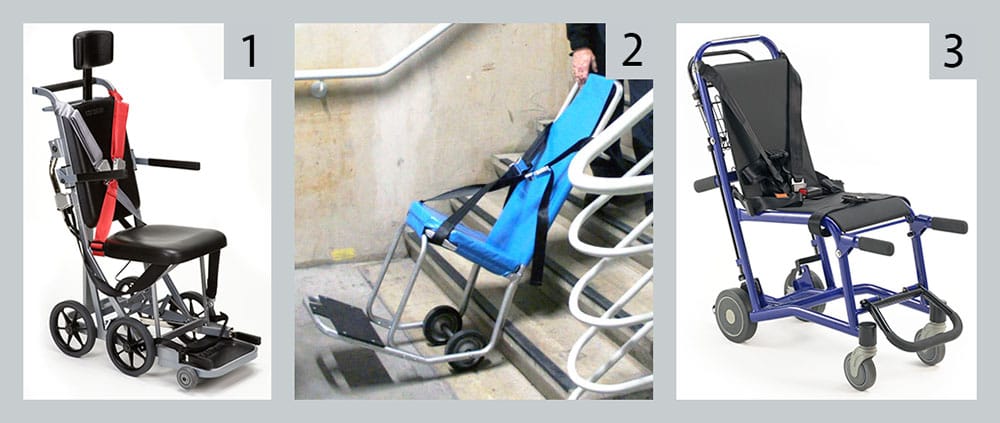
Using an aisle chair to reach your seat
If you cannot walk down the airplane aisle, airport staff may use something called an aisle chair.
Remember the ankle replacement surgery I mentioned earlier? That was one of the few times I needed to use an aisle chair.
If you have never seen one before, an aisle chair is a very narrow wheelchair designed to fit down the airplane aisle. Airport staff will bring you to the aircraft door in a regular wheelchair, then transfer you into the aisle chair to reach your seat.
It is not comfortable, but it gets the job done.
Boarding the plane is often the most physically demanding part of the travel day. Once you’re seated, the next challenge is managing comfort and accessibility during the flight itself.
Flying With a Wheelchair or Mobility Device
If you are flying with a wheelchair, there is a good chance a gate agent will eventually tell you that it needs to be checked. In many cases, that isn’t actually true.
Aircraft with 100 or more seats are required to have a designated onboard storage closet for one folding or manual wheelchair. That space is typically prioritized for wheelchairs over crew luggage.
If your chair collapses and fits, you can request that it be stored there instead of being placed in the cargo hold.
There are exceptions. If the chair is too large, non-collapsible, or battery-powered, it may need to go in the cargo hold instead. The good news is that airlines are required to transport mobility devices free of charge.
Knowing that rule ahead of time makes those conversations at the gate a lot easier.
What Air Travel for Disabled Passengers Onboard Looks Like
Sitting in a cramped airplane seat for hours can be uncomfortable for anyone. When you’re flying with disabilities, that discomfort can turn into real pain or fatigue much faster.
Once you’re on board, you quickly realize airplanes were not designed with accessibility in mind. The aisles are narrow, the seating space is tight, and the bathrooms are often barely large enough for one person to stand in comfortably.
Some larger international aircraft have a lavatory that can accommodate the onboard aisle chair, but many domestic flights do not. If you’re on a longer flight, that’s something worth planning for ahead of time.
Managing Pain, Fatigue, or Sensory Overload
Flying is tiring for everyone. When you add a disability into the mix, the exhaustion can hit a little differently.
Sitting in one position for hours can cause pain, swelling, or circulation issues. For me, my prosthetic can start protesting if I leave it on too long without enough space to stretch my leg.
And that is before we even talk about the rest of the travel day.
By the time you actually get on the plane, you have already navigated parking, check-in, security, crowds, noise, and about twelve announcements over the airport loudspeaker telling someone not to leave their bag unattended.
For travelers with sensory sensitivities, neurological conditions, or chronic fatigue, that environment can be a lot. Bright lights, engine noise, and crowded spaces can quickly overwhelm your senses after an already long travel day which is why I plan travel days very differently now than I used to.
3 Tips for Staying Comfortable During the Flight
Over time I have learned a few small things that make a big difference once the plane is in the air.
Tip 1: Movement
The first is movement. Even small shifts in position or stretching when possible can prevent your body from stiffening up by the time you land.
Tip 2: Hydration
Hydration also matters more than most people realize. Airplane cabins are extremely dry, and dehydration can make pain, headaches, and fatigue worse by the end of the flight.
Tip 3: Pacing
The biggest lesson I’ve learned is pacing. Travel days already take a lot out of your body, so I try not to schedule anything major after a flight anymore.
Sometimes the best thing you can do is land, get to where you’re staying, and give your body time to recover before jumping into everything else.
Because once you start flying with a disability, you learn pretty quickly that the goal is not just getting there. It is getting there in one piece.
Arriving at Your Destination and Retrieving Equipment
Once the plane lands, most passengers stand up and begin leaving immediately. If you requested wheelchair assistance, the process usually works a little differently.
In most cases you will remain seated while other passengers deplane and wait for the airport assistance team to arrive with a wheelchair.
Sometimes they’re already waiting at the aircraft door. Sometimes… they are not.
It can take a few minutes, and occasionally longer depending on how busy the airport is. After a long flight it can feel like the longest wait of your life.
If assistance does not show up after a bit, press the call button and let the flight attendant know you are waiting. They can contact the gate team and remind them someone is still onboard.
Once they arrive, they will help you off the plane and through the airport to baggage claim or wherever you need to go next.
Checking Mobility Equipment for Damage
If you checked a wheelchair, scooter, prosthetic equipment, or other mobility device during the flight, take a few minutes to inspect it carefully before leaving the airport.
Air travel is not always gentle on equipment, and unfortunately mobility devices do get damaged more often than they should.
Check the obvious things first. Wheels, footrests, armrests, batteries, and anything that folds or detaches. Make sure nothing looks bent, cracked, or loose.
If something looks wrong, stop right there and take photos before you leave the baggage area.
Reporting Damage to the Airline
If your equipment was damaged during the flight, you absolutely have to report it before leaving the airport. I know that is the last thing anyone wants to deal with after a long travel day, but delaying this can make the process nearly impossible later.
Go straight to the airline’s baggage service desk and let them know what happened. They will open a damage report and start the process for repair or replacement.
Mobility devices are protected under U.S. Department of Transportation regulations. Airlines are responsible for repairing or replacing wheelchairs and other mobility equipment if they are damaged during air travel.
Which is exactly why documenting the damage right away matters.
It may be annoying to deal with in the moment, but handling it before you leave the airport is much easier than trying to track someone down after the fact.
Once you’ve made it through the airport and retrieved your equipment, the travel day is almost over. But over the years I’ve also learned a few small habits that make flying much easier overall.
4 Tips That Make Flying With a Disability Easier
1. Plan extra time for every stage of travel ⏰
Airports move slower when accessibility is involved. Wheelchair assistance, TSA screenings, and boarding can all take longer than expected. Giving yourself extra time means you’re not rushing through an airport your body was never meant to sprint through.
2. Communicate clearly with airline staff 📢
Most airport staff genuinely want to help, but they are also assisting dozens of passengers at once. Being direct about what you need, whether that’s extra time, help transferring seats, or assistance with mobility equipment, helps them support you more effectively.
3. Keep critical supplies in your carry-on 🧳
Anything your body depends on should stay with you on the plane. Medications, prosthetic supplies, and medical equipment should never be placed in checked luggage. Delays and lost bags happen more often than most travelers realize, and you don’t want to arrive somewhere without the things your body relies on.
4. Advocate for yourself when something isn’t working. 💁🏻♀️
Accessibility systems at airports don’t always work perfectly. If assistance hasn’t arrived, equipment was handled incorrectly, or something feels unsafe, speak up. You are allowed to ask for the accommodations you requested.
Frequently Asked Questions About Flying With a Disability
Flying with a disability can raise a lot of questions, especially if it’s your first time traveling with mobility equipment, medical supplies, or airport assistance. These quick answers cover some of the most common things travelers want to know before their trip.
1. Can you fly with a disability?
Yes. Airlines are required to provide accessibility accommodations under U.S. law. This can include wheelchair assistance, help boarding the aircraft, and support navigating the airport.
While accessibility systems aren’t perfect, millions of disabled passengers fly every year using these services.
2. How do I request wheelchair assistance at the airport?
You can request wheelchair assistance when booking your flight or by contacting the airline afterward. Most airlines allow you to add accessibility services directly through your reservation online.
When you arrive at the airport, check in with the airline desk so staff can coordinate assistance through security, boarding, and baggage claim.
3. Do disabled passengers board planes first?
In most cases, passengers who need extra time or assistance are invited to preboard before general boarding begins. This allows travelers to transfer to their seat, store mobility equipment, and settle in without navigating a crowded aisle.
4. Can I bring medical equipment on a plane?
Yes. Medical devices such as CPAP machines, prosthetics, and mobility equipment are allowed on airplanes and usually do not count toward your carry-on limit.
It’s still a good idea to notify your airline ahead of time if you’re traveling with specialized equipment.
5. What happens if an airline damages a wheelchair?
If a wheelchair or mobility device is damaged during a flight, report it immediately before leaving the airport. Airlines are responsible for repairing or replacing mobility equipment that is damaged during air travel.
Taking photos before your flight and documenting the damage at the airport can make the claims process much easier.
Preparing for Your First Flight With Access Needs
Disclosure: Phoenyx Travels contains affiliate links and Phoenyx Travels is a member of the Amazon Services LLC Associates Program. Meaning Phoenyx Travels receives commissions for purchases made through those links, at no cost to you. Please understand that we have experience with all of these companies, and recommend them because they are helpful and useful, not because of the small commissions we make if you decide to buy something. See our Affiliates and Disclaimers Policy and Privacy Policy for more info.
Flying with a disability is absolutely possible. It just usually takes more planning, more patience, and a lot more problem solving than most airlines like to admit.
The first trip is often the hardest because everything is new. You don’t yet know where the friction points are going to show up — whether that’s airport assistance timing, security screening with medical equipment, or figuring out how your body handles a long travel day.
But once you start learning how the systems work and what your body needs, the process becomes much easier to manage.
Not perfect. Just easier.
Over the years I’ve built systems and checklists that help me prepare for flights so travel days don’t turn into chaos. Things like planning assistance requests, packing medical supplies properly, and organizing the gear my body depends on.
That’s exactly what I put together in the Flight-Ready Travel Kit — a collection of checklists and travel planning tools designed to make accessible travel easier.
If you’re preparing for your first flight or just want a calmer, more organized way to travel, it’s a great place to start.


