
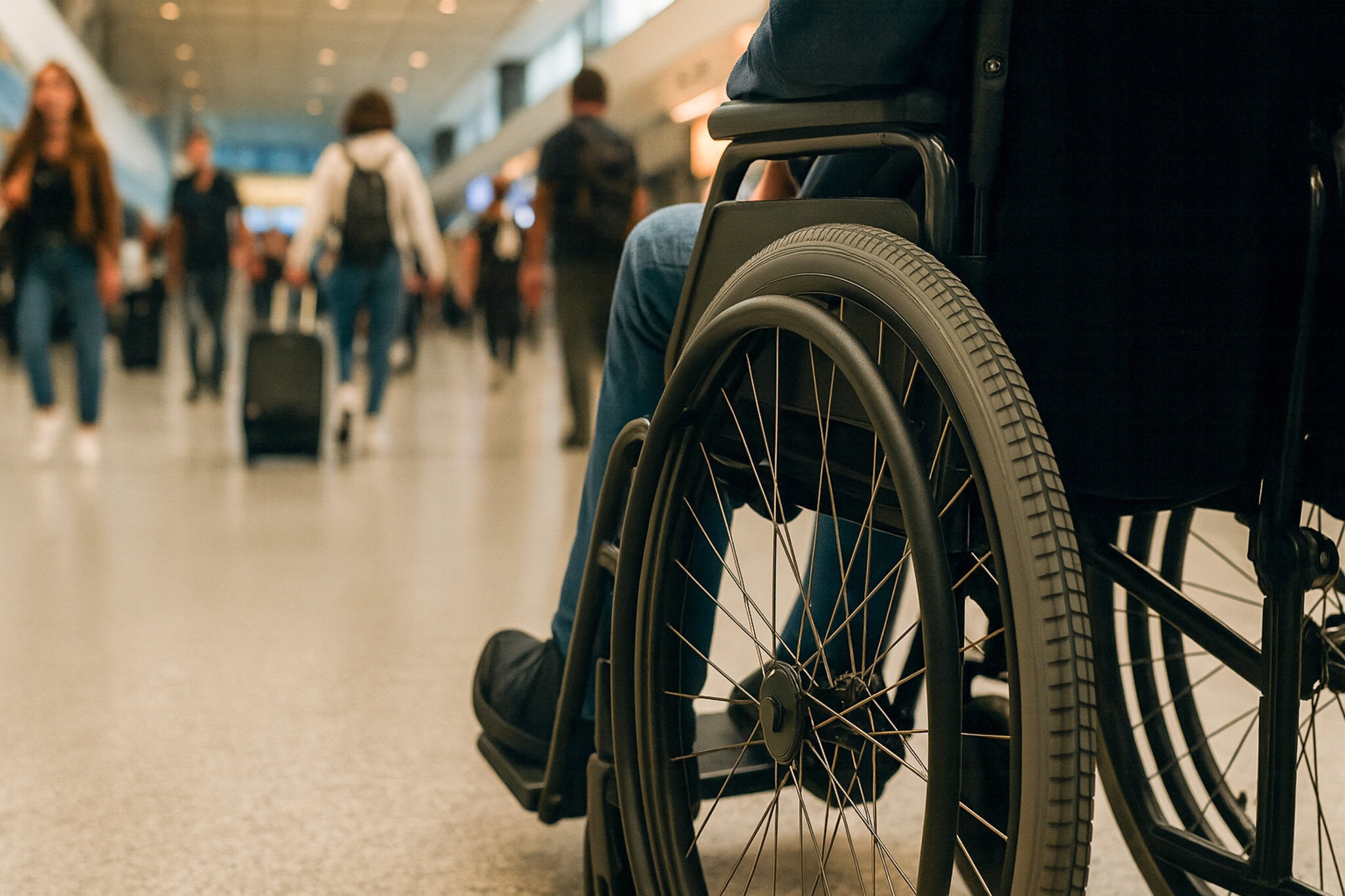
5 Tips to Actually Make Traveling With a Disability Easier

Traveling with a disability isn’t something you can just “wing.” I’ve done it with a wheelchair, with a walker, with a prosthetic, and even while carrying meds that literally get injected into my legs. If there’s a version of accessible travel hell, I’ve probably lived it.
Think endless pat-downs, security staff who clearly missed the disability training session, and the joy of wondering whether your wheelchair is going to make it to baggage claim in one piece.
Add in sensory overload from airports that are basically chaos factories, and you’ve got a recipe for flares, swelling, and full-body exhaustion before you even hit your gate.
Here’s the thing: you don’t have to learn all of this the hard way like I did. After years of trial, error, and more “random screenings” than I can count, I’ve figured out what actually helps.
I’ve built this guide around the accessible travel tips I wish I had years ago — because traveling with a disability shouldn’t mean sacrificing your safety, sanity, or sense of adventure.
Tip 1: Know Your Rights + Use Disability Assistance Programs
Disclosure: Phoenyx Travels contains affiliate links and Phoenyx Travels is a member of the Amazon Services LLC Associates Program. Meaning Phoenyx Travels receives commissions for purchases made through those links, at no cost to you. Please understand that we have experience with all of these companies, and recommend them because they are helpful and useful, not because of the small commissions we make if you decide to buy something. See our Affiliates and Disclaimers Policy and Privacy Policy for more info.
Here’s what nobody tells you: airports and airlines won’t make accessibility easy. If you don’t know what to ask for, you’ll end up in the “figure it out yourself” lane — which usually means missed flights, swollen limbs, and a full meltdown before security. Some airlines are great with accessibility; others, not so much.
Air Carrier Access Act
The Air Carrier Access Act says airlines can’t discriminate against disabled travelers. That means they have to provide assistance — wheelchairs, boarding help, accessible seating, all of it. In practice? You usually have to remind them of that fact. Repeatedly.
TSA Cares
Then there’s TSA Cares, which I wish I had known about years ago.
Instead of my usual very public “intimate moment” pat-downs with TSA agents, I can now call ahead, get a Passenger Support Specialist, and at least pretend I’m moving through security like a normal human.
Sometimes theres delays, especially when you’re traveling during a government shutdown. Always be aware of events that can affect flying.

PRM Assist
Internationally, look for PRM Assist (short for “passengers with reduced mobility”). It’s your way to request escorts, buggy rides, and help navigating customs lines that otherwise feel endless.
I literally did not know about this until the night before my flight back home to the U.S. from Ireland, but it saved me hours of waiting in customs and security lines.

Sunflower Program
And if you’re dealing with invisible disabilities, many airports recognize the Sunflower Program — a discreet way to let staff know you might need extra support.

Dealing with customs in the U.S.?
And for U.S. customs? The CBP app will save you from standing in an eternity of lines that make Disney queues look like easy. If standing isn’t your strong suit (it’s not mine), this is the hack you didn’t know you needed.
Bottom line: these programs exist for a reason. Use them. You paid for your ticket like everyone else, and you don’t get bonus points for suffering through an airport the hard way.
Like the Post? Save it for Later!
Tip 2: Plan Ahead with Your Airline
If you’ve got a disability, “just showing up at the airport” is not a thing. Airlines need notice — sometimes weeks of it — if you want to fly without a complete disaster on your hands.
💺 Seats matter.
As an amputee, I’ve learned that swelling on long flights is real. Exit row or bulkhead seats are lifesavers if you qualify, and business or first class is worth the upgrade if you can swing it. More legroom equals less pain — it’s that simple.
🦽 Mobility aids need protection.
Airlines break wheelchairs more often than they admit, so don’t rely on “gentle handling” to save yours. Get travel insurance that specifically covers mobility aids, tag every piece of equipment, and take photos before you hand it over. If something happens, you’ll want proof.
📃 Service animals, medical equipment, and some prescriptions need paperwork.
Airlines require advance notice for service animals, injectable meds, or devices like portable oxygen. Call them well before your flight. Showing up at check-in with a surprise four-legged companion or a bag full of syringes is not going to end well.
The takeaway? Call your airline, get your needs documented, and double-check everything in writing. Hope for smooth sailing, but plan like they’re going to forget half of what you told them.

Tip 3: Prep for the Security Screening Gauntlet
Security and I have history. Every flight, without fail, my prosthetic sets off alarms and I get pulled for a “random” pat-down that feels way too intimate. At this point, it feels less like security and more like an awkward ritual I didn’t sign up for.
The problem isn’t just the pat-downs — it’s the inconsistency. One agent waves you through like it’s no big deal, the next treats your mobility aid like contraband. I’ve had prosthetics swabbed, medical bags rummaged through, and staff that have clearly not been trained in accessibility.
Here’s what I’ve learned:
- Assume you’ll be flagged. If you go in expecting the extra time and stress, you won’t be blindsided when it happens.
- Stay calm but firm. Staff turnover is high and training is uneven, so half the time you’ll know the rules better than the person screening you. Correct them politely, but don’t back down if they try to push.
- Ask for accommodations early. Can’t stand for long? Need a chair? Say it upfront before you’re halfway through the line. They’re more likely to listen if you set the tone right away.
It’s not about making security “easy” — it never is. It’s about getting through the process without losing all your energy (or sanity) before you even reach your gate.
Tip 4: Manage Sensory and Fatigue Triggers
Bright lights, endless announcements, crowds moving in ten different directions — airports are basically designed to fry your nervous system. Add in the constant humming of an aircraft once you’re on board, and you’ve got a perfect recipe for sensory overload.
For me, it shows up as neuro-fatigue. Too much noise, light, or stimulation, and my brain just shuts down. I’ve had full-on crash moments mid-travel where I can’t think straight, move fast enough, or even process what’s happening around me. It’s not dramatic — it’s just reality.
Here’s what helps me stay functional:
- Noise-canceling headphones or Loop earplugs. They take the edge off the chaos so your brain isn’t working overtime.
- Eye masks and blankets. On planes, I block out as much as possible. It signals my body that it’s safe to rest.
- Hydration and snacks. Nothing fancy, just enough to keep my system steady without sugar crashes or dehydration headaches.
- Planned downtime. Some airports are finally catching on and adding designated quiet spaces — but most aren’t there yet. When that’s the case, I hunt for the emptiest gate or a tucked-away corner and treat it like my own makeshift calm zone.
You can’t make airports quiet or planes less cramped, but you can build yourself a buffer. Think of it as survival gear for your nervous system.
Tip 5: Build Flexibility and Backup Plans Into Every Trip
If you travel with a disability, the one thing you can count on is that something will go wrong. A wheelchair gets damaged. Wheelchair assistance doesn’t show up.
A “short” customs line turns into an hour of standing you can’t physically manage. You can’t plan for every disaster, but you can make sure you’re not stranded when it happens.
Here’s how I handle it:
- Leave margin. I don’t book tight connections because I know I move slower, and I always pad my trip with recovery days. If I need to crash for 24 hours after flying, it doesn’t derail everything.
- Protect your gear. Wheelchairs are expensive, and airlines are not gentle. I carry travel insurance that covers mobility aids and take photos of my chair before check-in. It’s the difference between “good luck proving that” and “here’s my claim.”
- Keep meds in your carry-on. I’ve had bags delayed, and the thought of being without injectable meds or daily essentials isn’t an option. I always pack more than I think I’ll need in case flights get canceled or rerouted.
- Ask for help — even if it feels awkward. Staff sometimes forget or overlook disability assistance, and I’ve had more than one flight where PRM never showed. Speaking up (loudly, if necessary) is often the only way to get the help you’re promised.
Flexibility isn’t just about going with the flow. It’s about planning enough backups that when things fall apart — and they will — you can still get where you’re going without burning yourself out completely.
Like the Post? Save it for Later!
FAQs About How to Travel With a Disability
Traveling with a disability comes with questions that most airlines and airport websites don’t answer clearly. Below are some of the most common concerns I hear — with straightforward answers based on both experience and research.
1. Do I need to tell the airline about my disability before I fly?
Yes, it’s always better to tell the airline about your disability before you fly. Advance notice gives them time to set up seating, PRM assist, or help with mobility aids. If you wait until you’re at the airport, you’ll often deal with delays or staff scrambling to figure it out.
2. What should I do if my wheelchair is damaged during a flight?
If your wheelchair is damaged during a flight, report it immediately at the airline desk before leaving the airport. Document everything with photos and file a claim. This is also where travel insurance that covers mobility aids becomes critical — it helps cover repair or replacement costs when the airline drags its feet.
3. Can I bring medical equipment or injectable medications on a plane?
Yes, you can bring medical equipment or injectable medications on a plane, but you need to plan ahead. Keep them in your carry-on with a doctor’s note or documentation. Most airlines require advance notice for medical devices, and TSA may need to swab or inspect them during screening.
4. How do I handle long security lines if I can’t stand for long periods?
If you can’t stand for long periods, tell airport staff right away — don’t wait until you’re stuck in the middle of the line. PRM assist, TSA Cares, or a wheelchair escort can move you into accessible lanes. Some airports are better than others, but asking early makes the process smoother.
5. Are there quiet spaces in airports for sensory overload?
Some airports now have quiet spaces for sensory overload, but most don’t. If you’re sensitive to noise or light, plan ahead with noise-canceling headphones, earplugs, and an eye mask. I usually hunt down an empty gate or tucked-away corner when no official quiet room exists — it’s not perfect, but it helps.
Making Travel Work When You Have a Disability
Traveling with a disability isn’t simple, and honestly, it probably never will be. But with the right prep — from knowing your rights to managing sensory triggers — you can make airports less of a battle and actually arrive ready to enjoy your trip.
If this post hit home, you’ll want to keep going. I’ve shared more about navigating accessible tourism, what it’s really like boarding flights with a prosthetic, and the gear that actually makes flying easier when your body needs extra support.
And if pacing is your biggest challenge, grab my Slow Day eBook today — with my Sensory Reset Day guide coming soon. Both are built to help you travel smarter, not harder, so you can keep exploring without burning out.


